
Functional Recovery Webinar Series Registration
Cost:
$249/member - series (all six webinars)
$399/non-member - series (all six webinars)
Series Registration
Wednesday, October 7, 12:00p.m. - 1:00p.m. PT
Development of New Functional Recovery Standards
Development of prescriptive functional recovery design standards for new buildings is critical to enabling design for functional recovery performance objectives that support community resilience. In the U.S., seismic design provisions are vetted first through the Building Seismic Safety Council’s Provisions Update Committee (BSSC PUC), which develops the NEHRP Recommended Seismic Provisions. This presentation will describe the functional recovery provisions that have been approved to be included as a voluntary appendix in the 2026 edition of the NEHRP Provisions and are also being considered by the ASCE 7-28 development committees. The provisions introduce the concept of Functional Recovery Categories, a concept akin to but intentionally separate from Risk Categories, which allows a target recovery time to be selected based on the occupancy and basic intended function of the structure. For each Functional Recovery Category, the provisions include applicable structural and nonstructural design criteria and address additional considerations that are integral to achieving functional recovery but are often thought of as outside the scope of design, including a role for a functional recovery coordinator.
Wednesday, October 14, 12:00p.m. - 1:00p.m. PT
Establishing A Functional Recovery Goal Matrix
Design is shifting away from safety-based objectives to resilience objectives that include enhanced goals of limiting damage, cost of repairs, and time to recovery of function. Using the FEMA P‑58 methodology, some engineers are already implementing resilience-based design for functional recovery on selected buildings in a performance-based context. Improving the resilience of entire communities, however, will require standardized design requirements adopted into the building code that can be broadly applied to new (and existing) construction.
This presentation will discuss the concepts and challenges associated with establishing a Functional Recovery Goal Matrix, describe past attempts at making assignments within such a matrix (including where the PUC ended up), and provide the high-level take-aways from the recently released NIST workshop report.
Register for October 14 Webinar or Full Series
Wednesday, October 21, 12:00p.m. - 1:00p.m. PT
Get Ready, Functional Recovery is Coming!
Register for October 21 Webinar
Wednesday, October 28, 12:00p.m. - 1:00p.m. PT
Case Studies Implementing FEMA P-58
Register for October 28 Webinar
Wednesday, November 4, 12:00p.m. - 1:00p.m. PT
QA/QC for Functional Recovery
Seismic design of structural and nonstructural components for enhanced performance is critical, but by itself may not deliver the intended performance. There are additional criteria during the planning, design, and construction of the building that the owner and design team need to consider ranging from business continuity planning to expended design and construction quality assurance to back-up systems. This presentation will provide the audience with a set of recommendations and tools to ensure that the anticipated performance of their design is consistent with their client’s recovery expectations.
Register for November 4 Webinar
Wednesday, November 11, 12:00p.m. - 1:00p.m. PT
Structural Health Monitoring as a Tool to Support Functional Recovery
Register for November 11 Webinar
Session Speakers
Wednesday, October 7
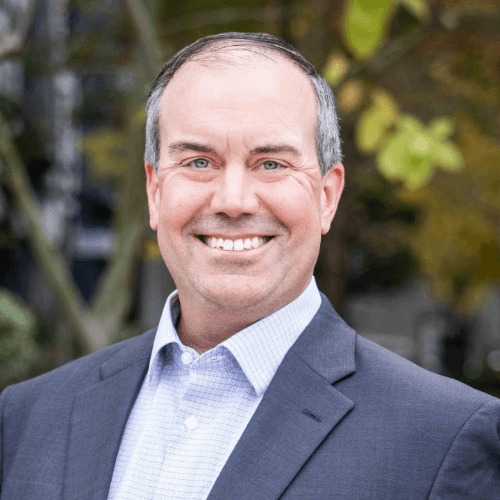
Ryan Kersting, Director of Technical Development, Buehler
Ryan Kersting is a licensed Structural Engineer and Director of Technical Development with Buehler in Sacramento, CA. With nearly 30 years of experience, he has a passion for advancing the structural engineering profession and the purpose of our work. He led the committee for the FEMA-NIST Functional Recovery “Report to Congress”; is currently serving as chair of the Functional Recovery Task Committee for the 2026 NEHRP Provisions; and is vice chair of TC-10 of the Seismic Subcommittee for the ASCE 7-28 development cycle. Ryan is a SEAOC Fellow and is a former president of SEAOC, NCSEA, and ATC.
Wednesday, October 14
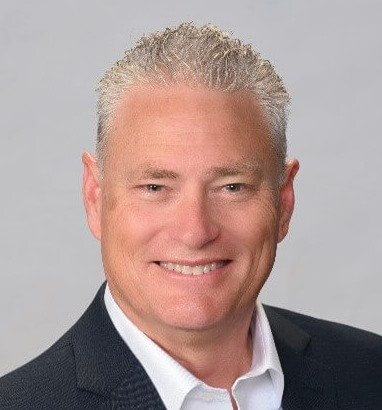
Jon Heintz, Executive Director, Applied Technology Council
Jon Heintz is the Executive Director of the Applied Technology Council in Redwood City, California. He is a licensed civil/structural engineer in California and Alaska with more than 35 years of experience in earthquake engineering practice and research, natural hazard mitigation and policy development, seismic evaluation and retrofit, and strategic planning on engineering research needs at the national level. He is actively involved in the development of guidelines, codes and standards for new and existing buildings, most recently the Provisions Update Committee (PUC) Functional Recovery Task Committee (FRTC), and has participated in post-earthquake investigations immediately following the 1989 Loma Prieta, 1994 Northridge, 1999 Chi-Chi Taiwan, and 2010 Chile Earthquakes, as well as damage assessments following Hurricanes Katrina and Rita in 2005.
He has led more than 100 ATC projects, including those leading to the publication of FEMA P-58, Seismic Performance Assessment of Buildings, Methodology and Implementation, and FEMA P-2090/NIST SP-1254 Recommended Options for Improving the Built Environment for Post-Earthquake Reoccupancy and Functional Recovery Time.
Wednesday, October 21
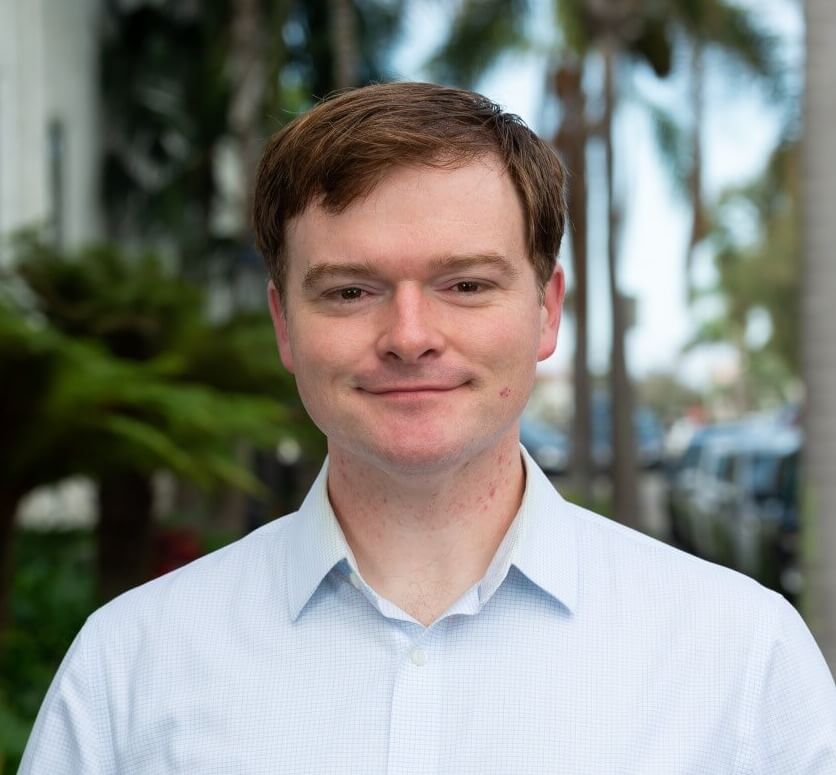
Jonathan Buckalew, Senior Project Engineer, Nabih Youssef Structural Engineers
Jonathan Buckalew is a senior project engineer and has worked 15 years at Nabih Youssef Structural Engineers. He received his BS and M.Eng from UC Berkeley. Jon is Past Chair of the SEAOC Resilience Committee, past board member of SEAONC, and voting member of the Functional Recovery Task Committee of the Provision Update Committee.
Wednesday, October 28
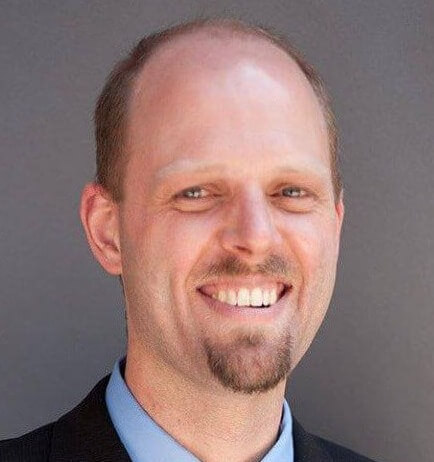
Curt B. Haselton, Professor of Civil Engineering, California State University, Chico
Curt B. Haselton, Ph.D., P.E. is a Professor of Civil Engineering at CSU Chico, and the Co-Founder of Haselton Baker Risk Group and SP3 (sp3risk.com). Dr. Haselton's research is in the areas of resilient design for functional recovery, building code and standards development, damage and loss estimation, collapse safety assessment, ground motion selection and scaling, and the treatment of uncertainties. Among his awards, Dr. Haselton received the Shah Family Innovation Prize for creativity, innovation, and an entrepreneurial spirit in earthquake risk mitigation and management, and the Helmut Krawinkler Award for leadership in implementing state-of-the-art research into practice.
Wednesday, November 4

Jakub Valigura, Senior Engineer, Arup
Jakub Valigura is a senior engineer with Arup in Oakland. He is a current chair of SEAOC Resilience Committee. Jakub is a voting member of the Functional Recovery Task Committee for the 2026 NEHRP Provisions and of the Seismic Subcommittee for the ASCE 7-28.
Wednesday, November 11
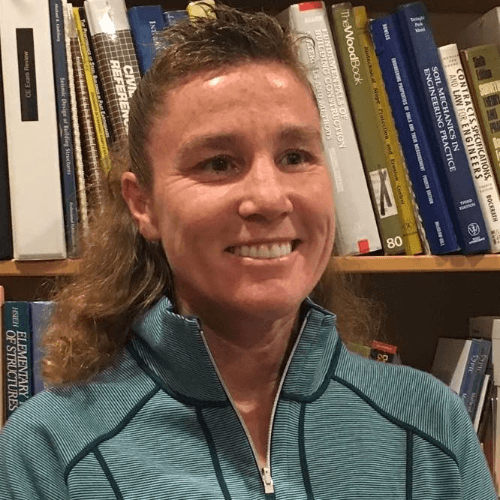
Tara Hutchinson, Professor, Department of Structural Engineering, University of
California, San Diego
Tara Hutchinson is a Professor in the Department of Structural Engineering at the University of California, San Diego with broad research interests in geotechnical, structural and earthquake engineering. Much of her work involves full- or large-scale shake table and fixed reaction-type experimentation. She obtained her Ph.D. at the University of California, Davis and M.S. at the University of Michigan, Ann Arbor. She has been on the faculty at UC San Diego since 2007 and presently serves as the Powell Laboratory Director. In 2024 she was appointed the Jan Talbot Endowed Chair in the Jacobs School of Engineering at UC San Diego.
Shokrullah Sorosh, PhD Candidate, Department of Structural Engineering, University of California, San Diego
Shokrullah Sorosh is a PhD candidate in the Department of Structural Engineering at the University of California, San Diego. He holds a B.S. in Civil Engineering and an M.S. in Structural Engineering from Istanbul Technical University. His research focuses on full-scale shake table testing of buildings and nonstructural components, with an emphasis on data-driven performance assessment. He also has experience in high-fidelity finite element analysis. He is an active student member of SEAOC EERI.
Upcoming Events
Functional Recovery Webinar Series
Functional recovery is moving from concept to practice, and SEAOC is bringing together the people shaping that shift. This six-part series walks through where the new standards are headed, how to set recovery goals with a client, and what implementation actually looks like on real projects.
Functional Recovery Series Registration
Time
12:00p.m. - 1:00p.m.
Dates
October 7, 2026
October 14, 2026
October 21, 2026
October 28, 2026
November 4, 2026
November 11, 2026
